EIN Social Updates & Insights
Explore Enterprise Industry Network social updates and business perspectives, alongside EIN Venture Capital insights for founders, capital seekers, investors, and growth-focused businesses.
Explore EIN Venture Capital Insights
Explore articles and videos on venture capital, startup funding, investor readiness, fundraising strategy, capital positioning, and growth-stage planning.
Read EINVC Blog → Watch EINVC Videos →Latest EIN Social Updates
Preparing for Investor Review? Make Sure Your Numbers Match Your Story

Oct 30, 2026
Preparing for investor conversations?
Your pitch deck may explain the opportunity.
Your financial information needs to support that story.
Potential investors may compare what management says about growth, traction and capital needs with the numbers behind the company.
That makes consistency an important part of investor readiness.
Start With the Metrics That Matter to Your Business
Not every company should present exactly the same metrics.
The relevant numbers depend on the company’s stage, business model and industry.
Depending on the business, founders may need to understand areas such as:
- Revenue
- Revenue growth
- Customer growth
- Recurring or repeat business
- Gross margin
- Operating expenses
- Cash position
- Customer concentration
- Other stage-specific operating metrics
The objective is not to fill the presentation with numbers. It is to know which numbers help explain the business.
Make Sure the Pitch and Financials Agree
If a pitch describes rapid growth, the supporting information should help explain that growth.
If the company says it has strong customer traction, founders should know what evidence supports that statement.
If the business is raising capital for expansion, the financial plan should connect that expansion to the proposed use of funds.
Inconsistency between the narrative and the numbers can create additional questions.
Know What Is Driving Revenue
For revenue-generating companies, the headline revenue number is only one part of the picture.
Founders may also need to understand what is driving that revenue.
Questions could include:
- Which products or services generate revenue?
- How concentrated is revenue among major customers?
- Is revenue recurring, transactional or project-based?
- What trends are visible over time?
- What factors are influencing growth?
The right level of detail depends on the company and investor.
Understand Spending and Cash Requirements
Investor readiness also means understanding where the company’s money is going.
Founders should be able to explain major operating expenses and how those expenses relate to the company’s current stage and strategy.
This becomes especially important when the company is raising capital to extend runway, build a team, develop a product or expand operations.
Know Your Runway
For companies using more cash than they currently generate, runway can become an important part of the capital conversation.
Founders should understand their current cash position, expected spending and how long available resources may support the company’s plan.
A capital request should connect logically to that financial reality.
Be Ready to Explain the Forecast
Projections are based on assumptions.
Investors may therefore want to understand what those assumptions are.
For example:
- What is expected to drive future revenue?
- What hiring is assumed?
- What sales or marketing investment is planned?
- What product milestones are expected?
- What costs are expected to increase?
The objective is not to guarantee future performance.
It is to show how management arrived at the forecast.
Connect the Capital Ask to the Financial Plan
The amount being raised should not exist separately from the company’s numbers.
The founder should be able to explain:
- How much capital is being sought
- Why that amount is appropriate
- How the capital is expected to be used
- What period or milestones it is intended to support
The capital request, use-of-funds plan and financial forecast should support the same underlying strategy.
Know the Weak Points Too
Investor readiness is not about pretending every metric is perfect.
A business may have customer concentration, uneven growth, developing margins, a short operating history or other risks.
Founders should understand those issues and be prepared to discuss them clearly.
A realistic explanation is generally more useful than avoiding a question that may emerge during review.
Prepare for Follow-Up Questions
A good investor conversation often produces additional questions.
Founders may be asked to explain:
- Changes in revenue
- Customer concentration
- Expense growth
- Cash requirements
- Forecast assumptions
- Capital allocation
- Operating risks
Being able to answer those questions requires familiarity with the business beyond the presentation itself.
The Numbers Should Support the Story
An investor presentation can describe where the company is going.
The financial information helps explain where the company is today and what may be required to move forward.
The strongest preparation comes when the business story, financial story and capital strategy are aligned.
EIN Venture Capital provides a starting point for businesses preparing for investor conversations, capital readiness and potential capital-source alignment.
Investor mandates, interest, valuation, due diligence, terms and investment decisions vary by investor and opportunity. Financial projections are forward-looking estimates and do not guarantee future performance. An inquiry, meeting or introduction does not guarantee investment or funding.
Frequently Asked Questions
What financial information should founders understand before meeting investors?
The relevant information depends on the company, but founders may need to understand revenue, growth, operating expenses, cash position, runway, customer concentration, projections and other business-specific metrics.
Why do investors compare the pitch deck with financial information?
Financial and operating information can help investors evaluate whether the numbers support the company’s claims about traction, growth, capital needs and future plans.
Do financial projections need to be guaranteed?
No. Projections are estimates based on assumptions. Founders should be able to explain those assumptions rather than present forecasts as guaranteed outcomes.
Why should the capital ask match the financial plan?
The amount being raised, use of funds and expected milestones should connect logically to the company’s operating requirements and broader strategy.
Take the Next Step
Subscribe on YouTube:
https://www.youtube.com/@enterpriseindustrynetwork
Preparing your business for investor review?
Get Started with EIN Venture Capital:
https://www.einvc.com/get-capital/
Exit. Acquire. Invest.
Explore Enterprise Industry Network
https://enterpriseindustrynetwork.com/
Raising Capital? Build a Clear Use-of-Funds Plan Before You Pitch Investors
Oct 23, 2026
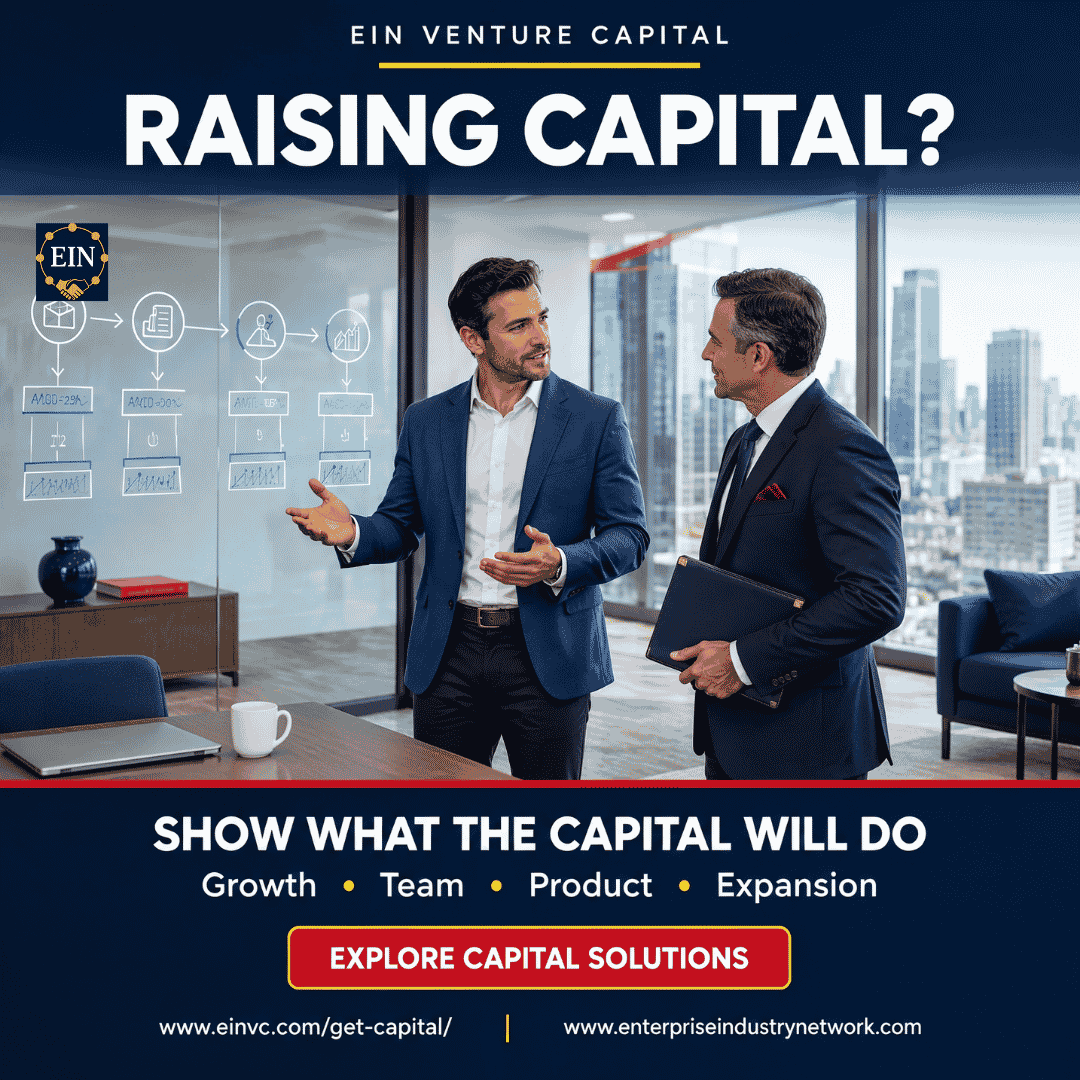
Raising capital?
One of the most important questions a founder should be prepared to answer is also one of the simplest:
What exactly will the capital allow the company to accomplish?
A fundraising target should ideally connect to identifiable business priorities rather than exist as an isolated number.
Investors may want to understand not only how much capital is being raised, but why that amount is appropriate, where it will be deployed and what the company expects to accomplish with it.
Start With the Business Objective
Before deciding how much capital to raise, identify what the company is trying to achieve.
The objective might involve launching a product, expanding into a new market, increasing production capacity, hiring key employees, strengthening sales and marketing, developing technology or supporting another stage of growth.
The capital request should connect logically to the company’s current position and intended next step.
Define the Use of Funds
A broad statement such as βwe need capital for growthβ may not provide enough information for a meaningful investor discussion.
A more useful use-of-funds plan explains the major areas where capital is expected to be deployed.
Depending on the company, those areas could include:
- Product development
- Technology or infrastructure
- Key hires
- Sales and marketing
- Inventory or production
- Geographic expansion
- Working capital
- Strategic initiatives
The specific allocation will vary by business.
Connect Capital to Milestones
A use-of-funds plan becomes more meaningful when the founder can explain what the spending is intended to achieve.
For example, capital allocated to hiring should connect to the functions or capabilities the company needs.
Capital allocated to product development should connect to identifiable development objectives.
Expansion capital should relate to the market, operating capacity or commercial opportunity being pursued.
The purpose is not to promise a guaranteed outcome. It is to show the reasoning behind the capital request.
Understand the Timing
Founders should also understand when capital is expected to be deployed.
Some expenses may occur immediately, while others may take place over several months or across different stages of the company’s plan.
Thinking about timing can help create a more realistic view of the company’s capital requirement.
Avoid Choosing the Raise Amount Arbitrarily
A fundraising target should not simply be the largest amount a company believes it can request.
Nor should it be based only on what other companies appear to be raising.
The amount should have a connection to the company’s own strategy, expected expenditures, operating requirements and planned milestones.
Know the Financial Story Behind the Ask
Investors may want to understand how the capital request relates to the company’s existing financial position.
Depending on the business and stage, that conversation may involve current revenue, operating expenses, cash requirements, growth assumptions and other relevant financial information.
Founders should be prepared to explain the assumptions behind the capital plan rather than relying only on the headline amount.
Be Ready for Questions
A capital discussion can create additional questions such as:
- Why does the company need this amount now?
- Which expenditures are most important?
- What happens if the company raises less than planned?
- What business milestones is the capital intended to support?
- How long is the capital expected to support the company’s plan?
- What assumptions were used to determine the amount?
Having thoughtful answers can make the capital story easier to understand.
The Capital Ask Should Tell a Story
A strong capital request is not simply:
βWe are raising $X.β
It should help explain the connection between the company today and where management is trying to take it next.
A more complete story looks at:
- Where the company is today
- What the next stage requires
- How much capital is being sought
- Where the capital is expected to go
- What milestones it is intended to support
That does not guarantee investor interest or investment.
It simply creates a clearer foundation for evaluating the opportunity.
Prepare Before Investor Outreach
Before approaching potential investors, founders can benefit from aligning the capital request, use-of-funds plan, financial information and pitch narrative.
If those elements tell different stories, the opportunity may become harder to evaluate.
EIN Venture Capital provides a starting point for businesses preparing for capital discussions, investor readiness and potential capital-source alignment.
Investor mandates, interest, due diligence, valuations, terms and investment decisions vary by investor and opportunity. An inquiry, review, meeting or introduction does not guarantee investment or funding.
Frequently Asked Questions
What does βuse of fundsβ mean when raising capital?
Use of funds describes how a company expects to deploy the capital it is raising, such as toward product development, hiring, marketing, expansion, working capital or other business priorities.
How should a company decide how much capital to raise?
The amount can be based on the company’s business objectives, expected expenditures, operating requirements, timing and the milestones the capital is intended to support rather than an arbitrary fundraising target.
Do investors care how the capital will be spent?
Potential investors may want to understand why the company needs capital, how management expects to deploy it and how the proposed spending relates to the company’s strategy and next stage of development.
Does having a clear use-of-funds plan guarantee investment?
No. Investor interest and investment decisions depend on many factors, including the company, opportunity, investor mandate, due diligence, valuation and proposed terms.
Take the Next Step
Subscribe on YouTube:
https://www.youtube.com/@enterpriseindustrynetwork
Looking to raise capital for your business?
Explore Capital Solutions with EIN Venture Capital:
https://www.einvc.com/get-capital/
Exit. Acquire. Invest.
Explore Enterprise Industry Network
https://enterpriseindustrynetwork.com/
Raising Capital? Build the Process Before You Start Investor Outreach
Oct 16, 2026
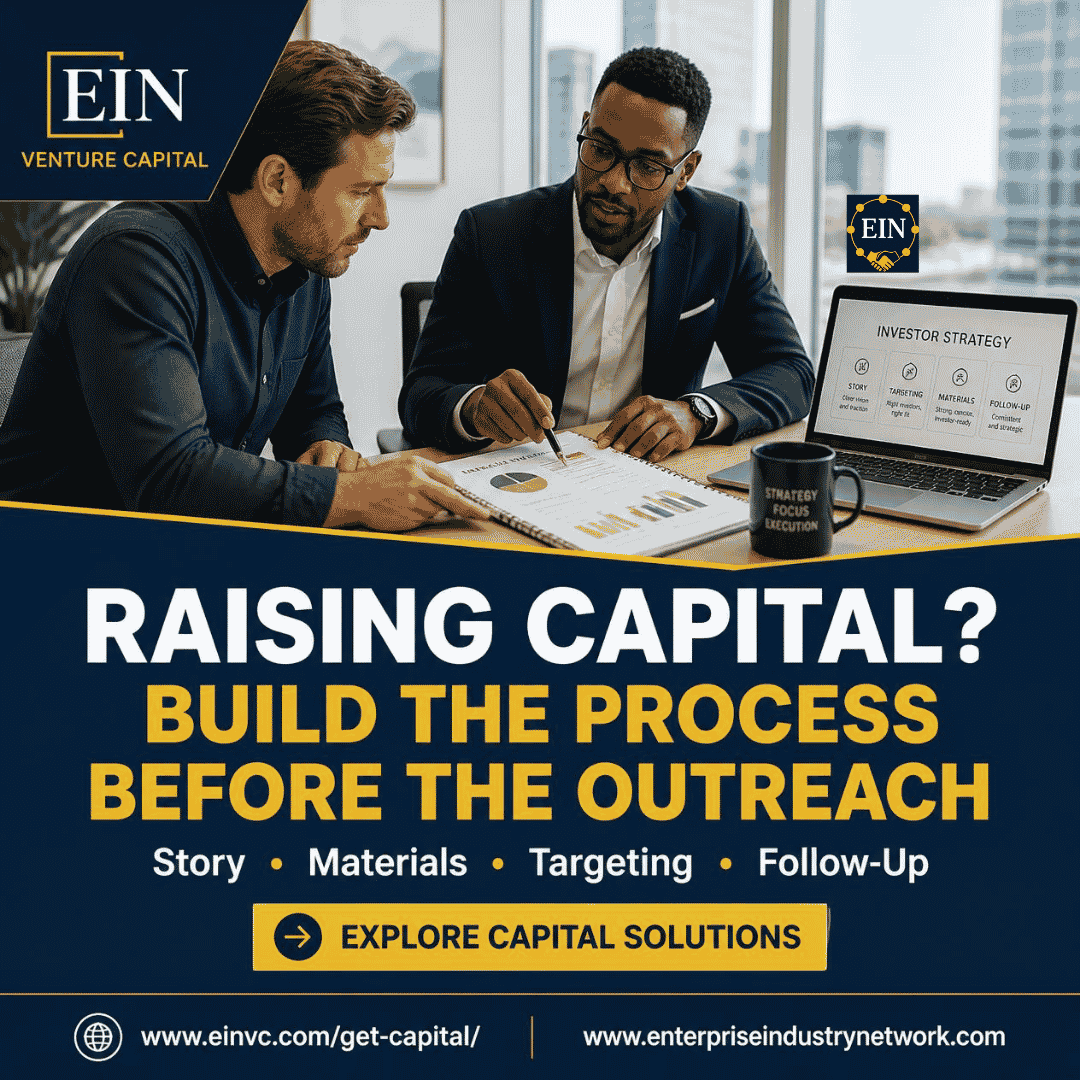
Raising capital?
Investor outreach should not begin simply by collecting names and sending a pitch deck everywhere.
A more deliberate capital-raise process starts with preparing the opportunity, defining what the company is seeking and identifying the types of investors that may fit before outreach begins.
1. Clarify the Capital Story
A prospective investor should be able to understand what the company does, what problem it addresses, how the business is progressing and why additional capital is being sought.
The story should connect the business opportunity with the capital requirement.
Founders should be prepared to explain:
- What the company does
- Who the customer is
- What traction has been achieved
- How much capital is being raised
- How the capital is expected to be used
- Why the timing makes sense
2. Prepare the Core Materials
Investor conversations may move quickly when there is genuine interest.
That makes it useful to have the core materials organized before outreach begins.
Depending on the company and transaction, those materials may include a pitch deck, financial information, ownership information, business metrics, use-of-funds details and other company-specific information.
3. Define the Capital Requirement
A broad statement that the company is βlooking for investorsβ is not the same as a defined capital strategy.
Founders should understand how much capital is being sought, what the capital is intended to accomplish and what stage of growth or business objective the raise is designed to support.
The capital requirement can influence which investors are appropriate to approach.
4. Identify the Right Investor Profile
Not every investor considers every opportunity.
Potential fit may depend on company stage, sector, geography, investment size, business model and transaction structure.
Targeting investors whose mandate may align with the company can make outreach more focused than sending the same materials to a broad, unrelated audience.
5. Control the Outreach Process
Investor outreach should be organized.
Founders may benefit from tracking who has been contacted, when information was shared, what response was received and what follow-up is appropriate.
A controlled process can also help reduce duplicate outreach and inconsistent communication.
6. Be Ready for Deeper Review
Interest in a pitch does not mean an investment decision has been made.
If an investor decides to explore the opportunity further, additional questions, meetings, documentation and due diligence may follow.
Founders should be prepared to support the claims made in the pitch with appropriate business information.
7. Expect the Process to Be Selective
Investor outreach can result in different responses.
Some investors may decline because the opportunity is outside their mandate. Others may want additional information. Some may decide to continue evaluating the company.
A decline does not necessarily mean the business itself is weak; it may simply mean that particular investor is not a fit.
Capital Raising Is a Process β Not a Single Pitch
A pitch deck is important, but it is only one part of raising capital.
The broader process includes preparing the company, defining the ask, identifying potential investor fit, managing outreach, responding to questions and supporting deeper review when appropriate.
EIN Venture Capital provides a starting point for businesses preparing for capital discussions and exploring potential investor fit.
Investor mandates, interest, due diligence, terms and investment decisions vary by investor and opportunity. An inquiry, review, meeting or introduction does not guarantee investment or funding.
Frequently Asked Questions
What should a company prepare before contacting investors?
A company may benefit from preparing a clear business story, capital requirement, use of funds, pitch materials, financial information and other supporting information relevant to the opportunity.
Should a company contact as many investors as possible?
Not necessarily. A more targeted approach can focus on investors whose stage, sector, geography, investment size and mandate may align with the opportunity.
Does investor interest mean the company will receive capital?
No. Initial interest may lead to additional conversations or due diligence, but final investment decisions depend on the investor and the opportunity.
Is a pitch deck enough to raise venture capital?
A pitch deck can be an important communication tool, but investors may also require additional business, financial, ownership, market and transaction information before making an investment decision.
Take the Next Step
Subscribe on YouTube:
https://www.youtube.com/@enterpriseindustrynetwork
Looking to raise capital for your business?
Explore Capital Solutions with EIN Venture Capital:
https://www.einvc.com/get-capital/
Exit. Acquire. Invest.
Explore Enterprise Industry Network
https://enterpriseindustrynetwork.com/
Not Every Investor Is the Right Investor: Why Capital Fit Matters
Oct 9, 2026
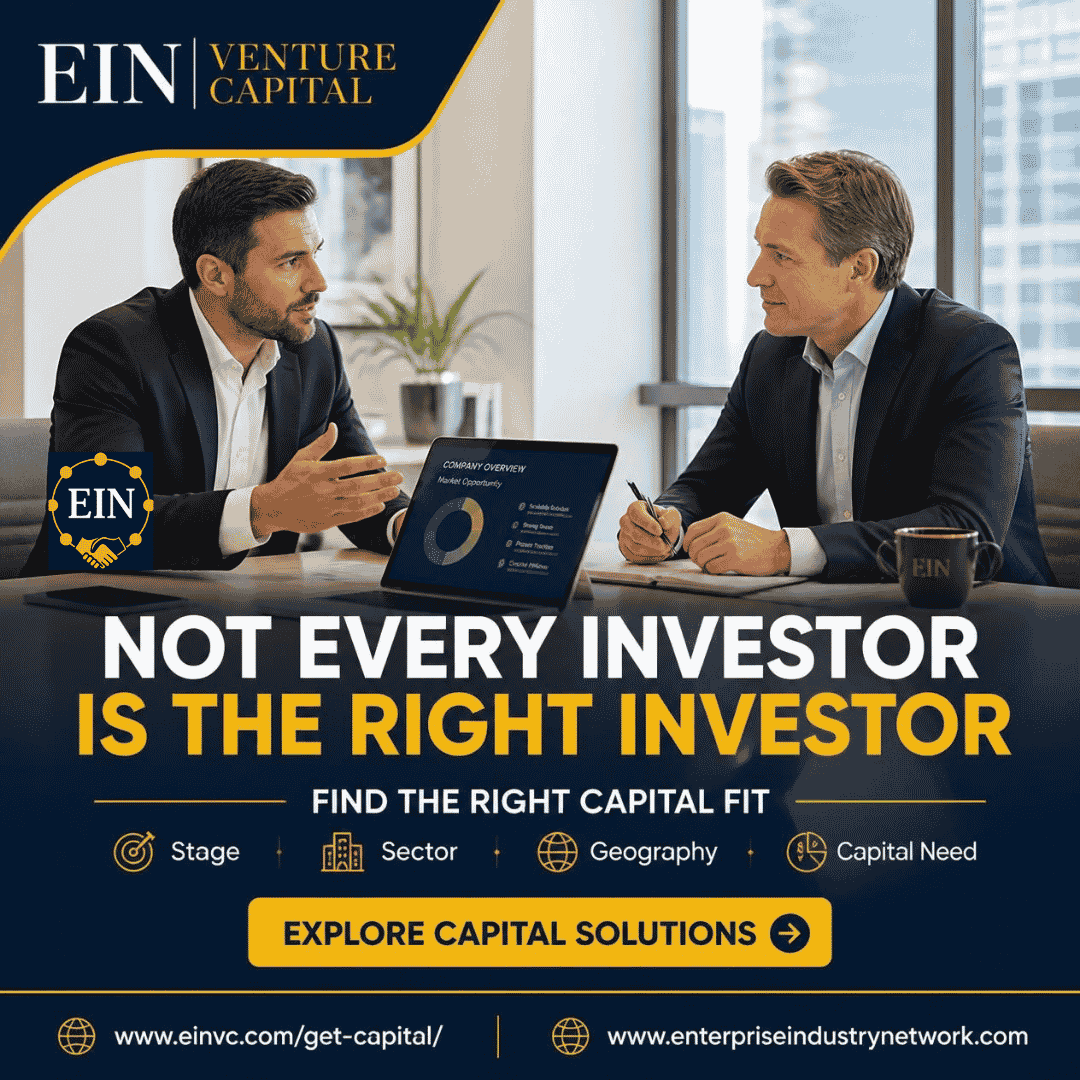
Not every investor is the right investor for every company.
A founder may have a strong business, a credible capital need and a well-prepared pitch, but the opportunity still needs to align with the investor’s mandate.
That is why capital strategy should include more than simply identifying people or firms with money to invest.
Company Stage Matters
Some investors focus on early-stage businesses. Others look for companies with established revenue, meaningful traction or a longer operating history.
A company should understand where it sits in its development before deciding which capital sources may be appropriate to approach.
Sector Matters
Investors often have industries they understand particularly well or sectors included within their investment mandate.
A strong opportunity can still be a poor fit if the investor does not participate in that sector.
Geography Can Matter
Some investors focus on specific countries or regions, while others invest across broader markets.
Understanding geographic preferences can help avoid spending time on capital sources that are unlikely to consider the opportunity.
The Capital Requirement Matters
Investor fit also depends on the amount of capital being sought.
An opportunity requiring a relatively small investment may not fit an investor focused on larger transactions, while a larger capital raise may fall outside the mandate of a smaller investor.
The Type of Capital Matters
Businesses may explore different forms of capital depending on their circumstances.
That can include equity, debt, revenue-based financing, strategic capital or other structures.
The appropriate path depends on the company’s stage, financial position, objectives and the available capital sources.
Start With Fit, Not Volume
Sending the same opportunity to as many investors as possible is not necessarily an effective capital strategy.
A more focused approach starts by understanding the company and identifying the types of investors whose criteria may align with the opportunity.
EIN Venture Capital provides a starting point for businesses exploring capital strategy, investor readiness and potential investor fit.
Investor mandates, interest, due diligence, terms and investment decisions vary by investor and opportunity. An inquiry, review or introduction does not guarantee investment or funding.
Take the Next Step
Subscribe on YouTube:
https://www.youtube.com/@enterpriseindustrynetwork
Explore Capital Solutions with EIN Venture Capital:
https://www.einvc.com/get-capital/
Exit. Acquire. Invest.
Explore Enterprise Industry Network
https://enterpriseindustrynetwork.com/
Are You Investor-Ready? What to Prepare Before Approaching Capital
Oct 2, 2026
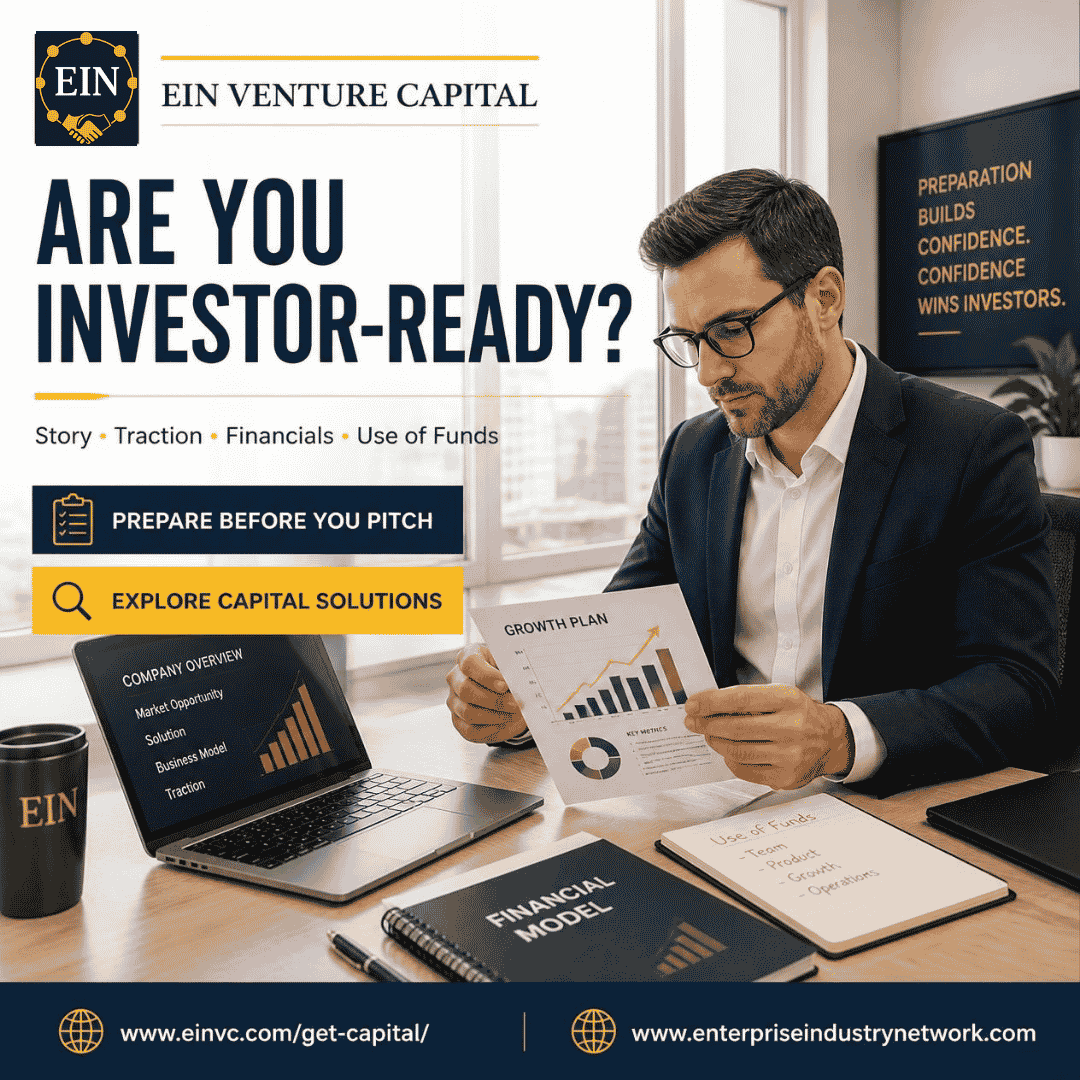
Are you investor-ready?
Having a pitch deck is useful, but investor readiness goes beyond presentation design.
A company preparing to raise capital should be able to explain the opportunity clearly, support the story with evidence and show how the requested capital connects to the next stage of the business.
Start With the Business Story
Investors need to understand what the company does, who it serves and why the opportunity matters.
The story should be clear enough to explain the problem, the solution, the market opportunity and the company’s position without unnecessary complexity.
Show Traction
Traction can take different forms depending on the stage of the business.
That may include revenue, customers, contracts, product adoption, recurring usage, partnerships, market validation or other measurable progress.
The goal is to show what has already been demonstrated, not only what the company hopes to achieve.
Understand the Financial Position
Investors may want to understand how the business performs financially and what assumptions support its projections.
That can include revenue, expenses, margins, cash requirements, runway and other company-specific financial information.
The level of detail will vary by company stage and investor type.
Be Clear About the Capital Ask
A company should be able to explain how much capital it is seeking and why that amount makes sense.
The capital request should connect to the company’s current stage, operating needs and growth plan.
Explain the Use of Funds
Investors generally want to know what the capital is intended to accomplish.
Depending on the company, funds may support product development, hiring, sales, technology, expansion, working capital or other strategic objectives.
The use of funds should connect clearly to the next stage of the company’s development.
Investor Readiness Is About Clarity
Investor readiness does not mean every company will receive investment.
It means the business is better prepared to explain the opportunity, answer questions and participate in a more informed capital conversation.
EIN Venture Capital provides a starting point for companies exploring investor readiness, capital strategy and potential investor fit.
Investor interest, due diligence, terms and investment decisions depend on the specific company, opportunity and investor. An inquiry, review or introduction does not guarantee investment or funding.
Take the Next Step
Subscribe on YouTube:
https://www.youtube.com/@enterpriseindustrynetwork
Explore Capital Solutions with EIN Venture Capital:
https://www.einvc.com/get-capital/
Exit. Acquire. Invest.
Explore Enterprise Industry Network
https://enterpriseindustrynetwork.com/
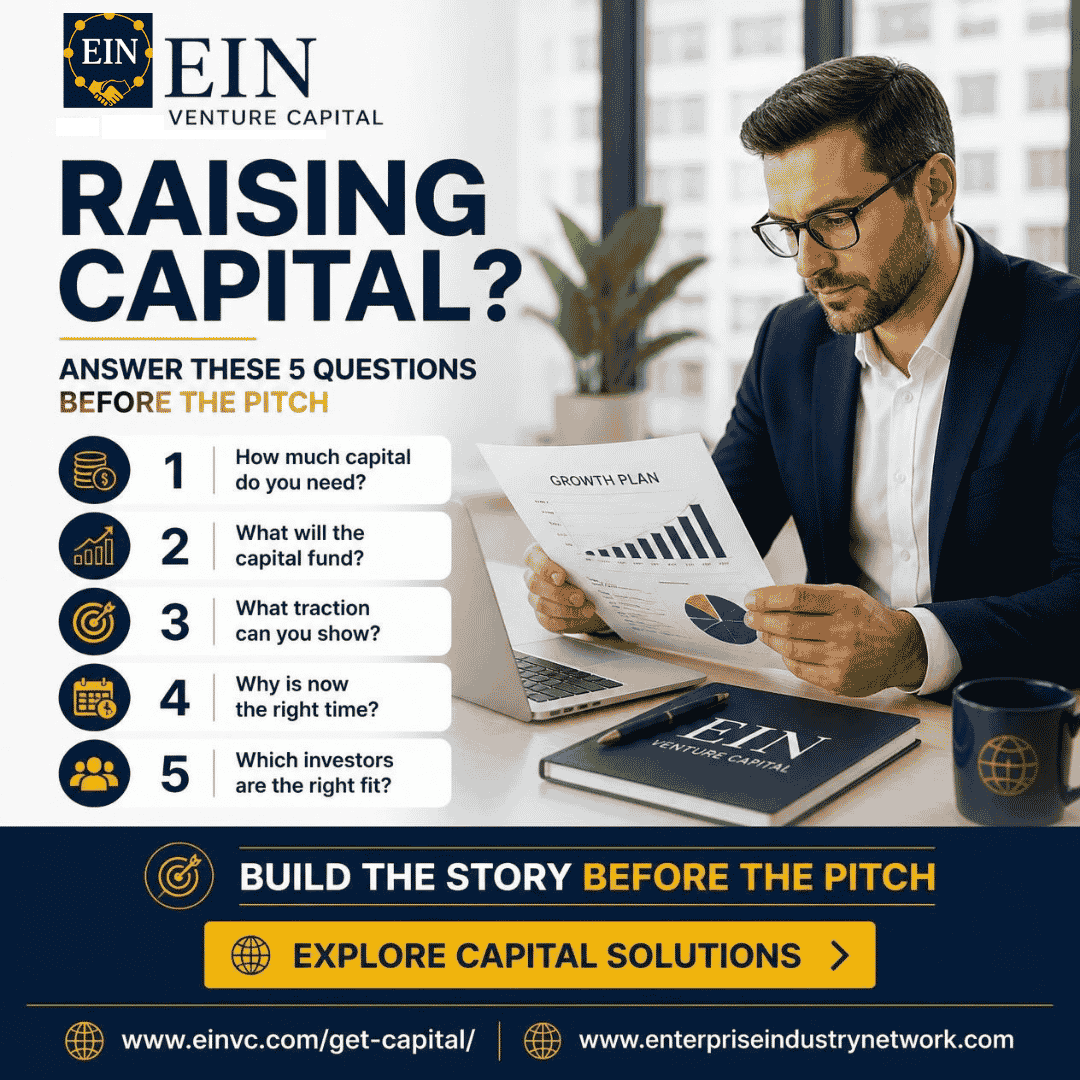
Raising Capital? Answer These 5 Questions Before You Pitch Investors
Sep 25, 2026
Raising capital starts before the pitch deck reaches an investor.
A founder or business owner should first be able to explain the opportunity clearly, including how much capital is being raised, why it is needed and what makes the company ready for investor consideration.
1. How Much Capital Do You Need?
A capital request should have a clear rationale.
The amount being raised should connect to the company’s plans, current stage and expected use of funds rather than simply representing a broad target.
2. What Will the Capital Fund?
Investors will generally want to understand how new capital is intended to support the business.
That may include expansion, hiring, product development, technology, market entry, operations or other growth initiatives depending on the company.
A clear use-of-funds explanation can help make the capital request easier to understand.
3. What Traction Can You Show?
Traction can take different forms depending on the stage of the company.
Examples may include revenue, customers, contracts, product adoption, partnerships, market validation, operating history or other measurable evidence that supports the business story.
4. Why Is Now the Right Time?
A strong capital narrative should explain why the company is raising money at this point in its development.
The timing should connect to a specific business opportunity, growth plan or strategic need.
5. Which Investors Are the Right Fit?
Not every investor is suitable for every company.
Investor fit may depend on factors such as sector, geography, company stage, capital requirement, business model and the investor’s mandate or preferred deal profile.
Build the Story Before the Pitch
A capital raise is not only about asking for money. It is about presenting a credible business opportunity with a clear capital need, supporting evidence and a logical use of funds.
EIN Venture Capital provides a starting point for businesses preparing to explore capital opportunities, investor readiness and potential investor fit.
Investor interest, capital availability, due diligence, terms and transaction outcomes depend on the specific opportunity and investor. An initial inquiry, review or introduction does not guarantee investment or funding.
Take the Next Step
Subscribe on YouTube:
https://www.youtube.com/@enterpriseindustrynetwork
Explore Capital Solutions with EIN Venture Capital:
https://www.einvc.com/get-capital/
Exit. Acquire. Invest.
Explore Enterprise Industry Network
https://enterpriseindustrynetwork.com/
Powered by the Enterprise Industry Network
EINEdge publishes Enterprise Industry Network updates across its divisions. EIN Venture Capital presents these network-wide perspectives alongside focused resources for founders, investors, and businesses preparing for growth and capital conversations.
Visit EINEdge InsightsReady to Accelerate Your Capital Journey?
Whether you're raising funds or seeking investment-ready deals, EINVC helps connect you to the right capital at the right time.